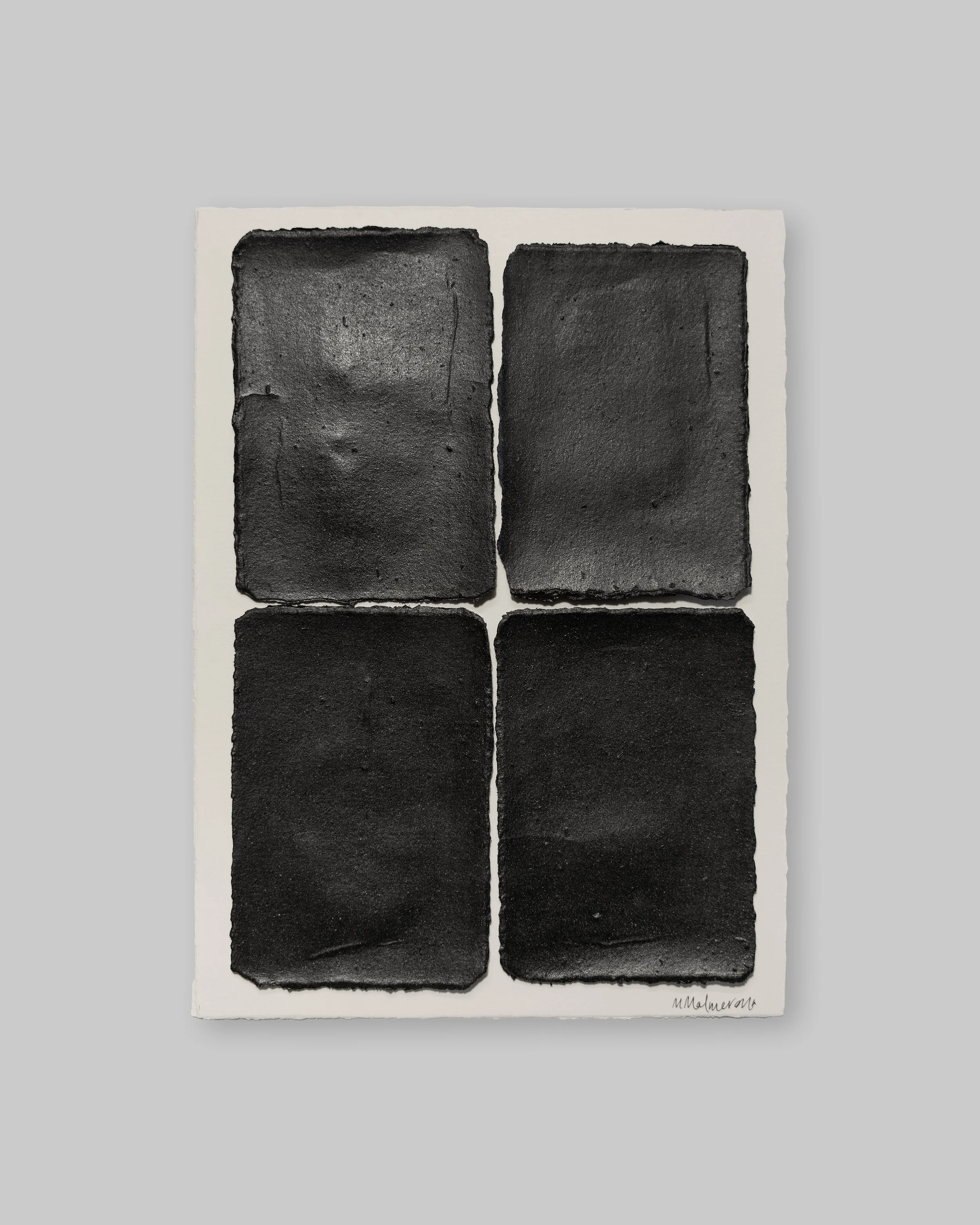
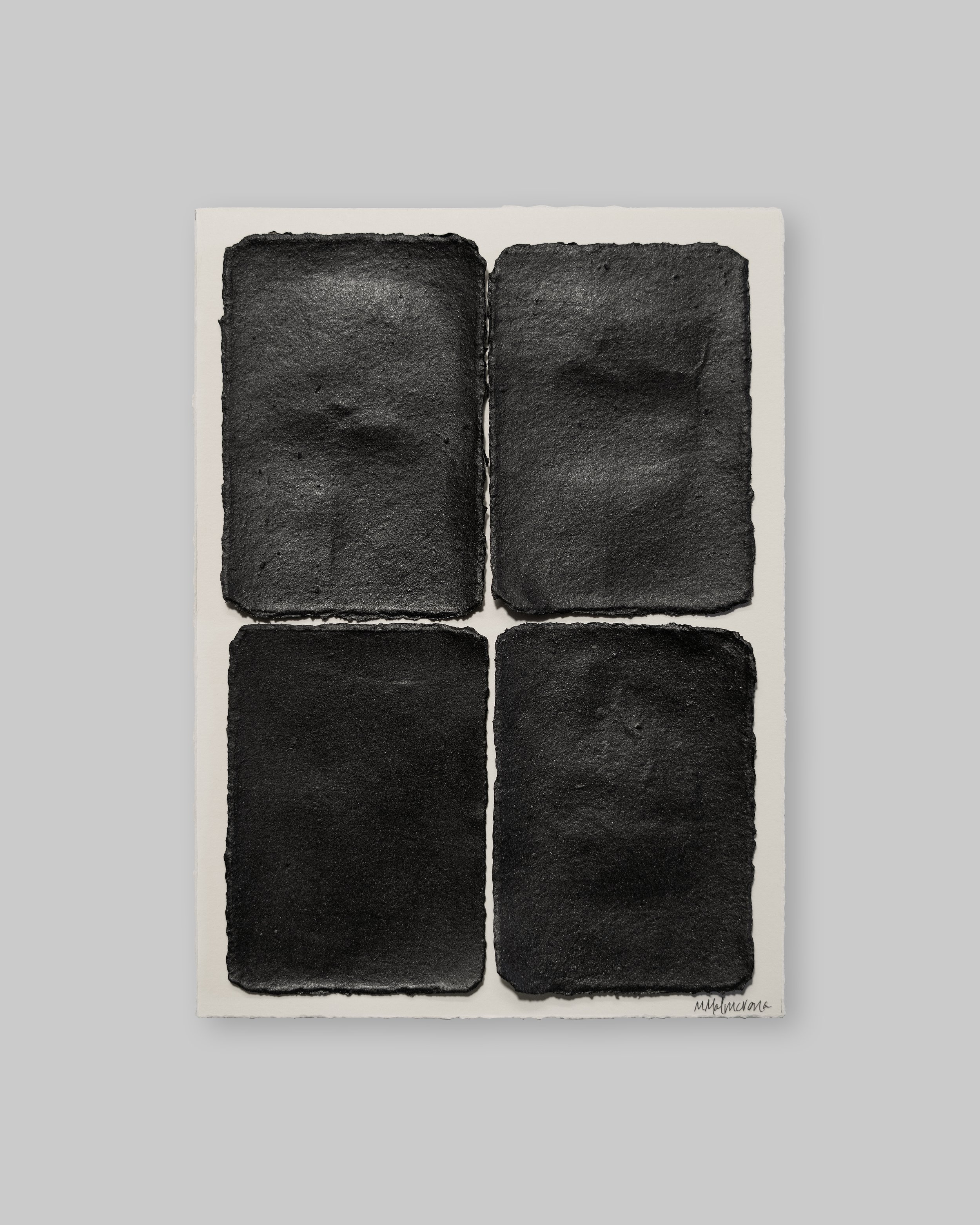
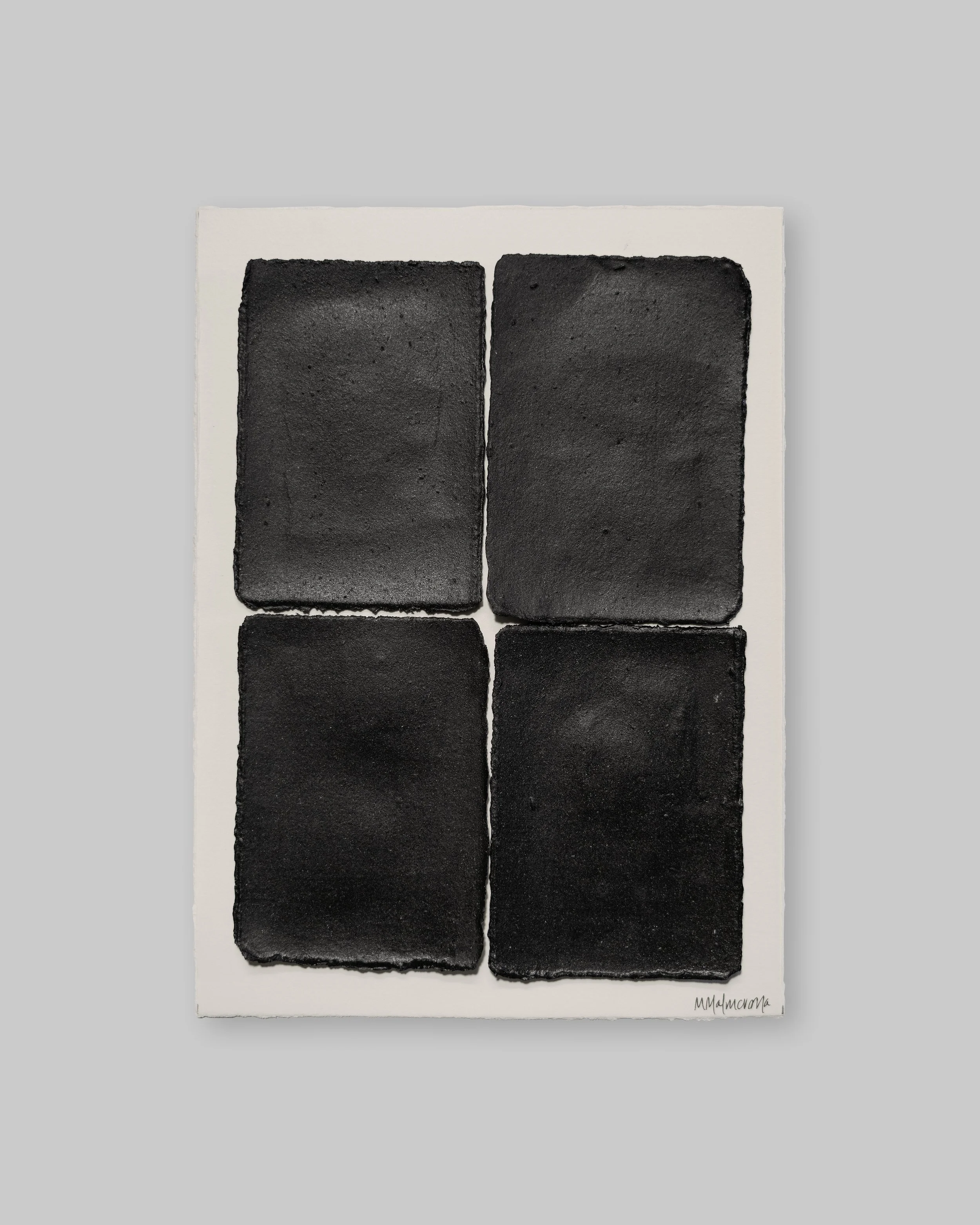
Card Drawings 1, 2026
The grid, American theorist Rosalind Krauss writes, “is what art looks like when it turns its back on nature.” We place things upon a grid when drawing maps, constructing buildings, or arranging our cities—in short, when attempting to make sense of the world around us. The grid offers a kind of solace: a means of approaching an overwhelming world by dividing it into manageable units. But this order is an imagined one. Grids rarely exist in nature; they merely present a superficial way of understanding it. Consisting of torn paper arranged in various grid configurations, these works reflect our desire to organise (and, as such, understand) the world around us, while acknowledging the impossibility of ever fully doing so. They are as much concerned with what each cell within the grid contains as with the spaces that separate them—a network of paths, boundaries, and in-betweens—as well as what lies beyond. “By virtue of the grid,” Krauss continues, “the given work of art is presented as a mere fragment, a tiny piece arbitrarily cropped from an infinitely larger fabric.” We are presented with a fraction of a whole, yet a grid logically extends: infinitely and in all directions. For Mondrian and Malevich, Krauss suggests, the grid was a “staircase to the Universal” and, in turn, to the spiritual. The act of arranging cards into a grid might seem a mundane one. But perhaps it also reflects a fundamental desire: making sense of the world we are so haphazardly and involuntarily placed within.
Ash, glue, paper, and pigment on Fabriano paper
16 x 22 cm